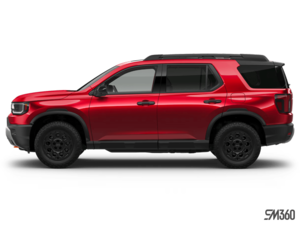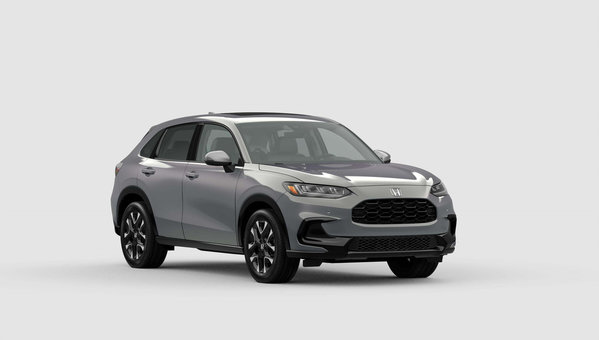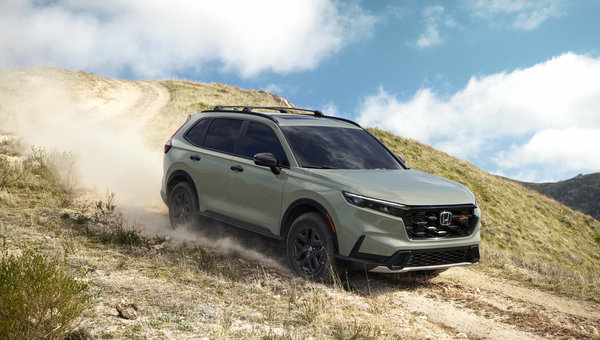
2026 Honda Passport vs. Honda Pilot: Which SUV Carries Your Summer Load Better?
July 30 2026,
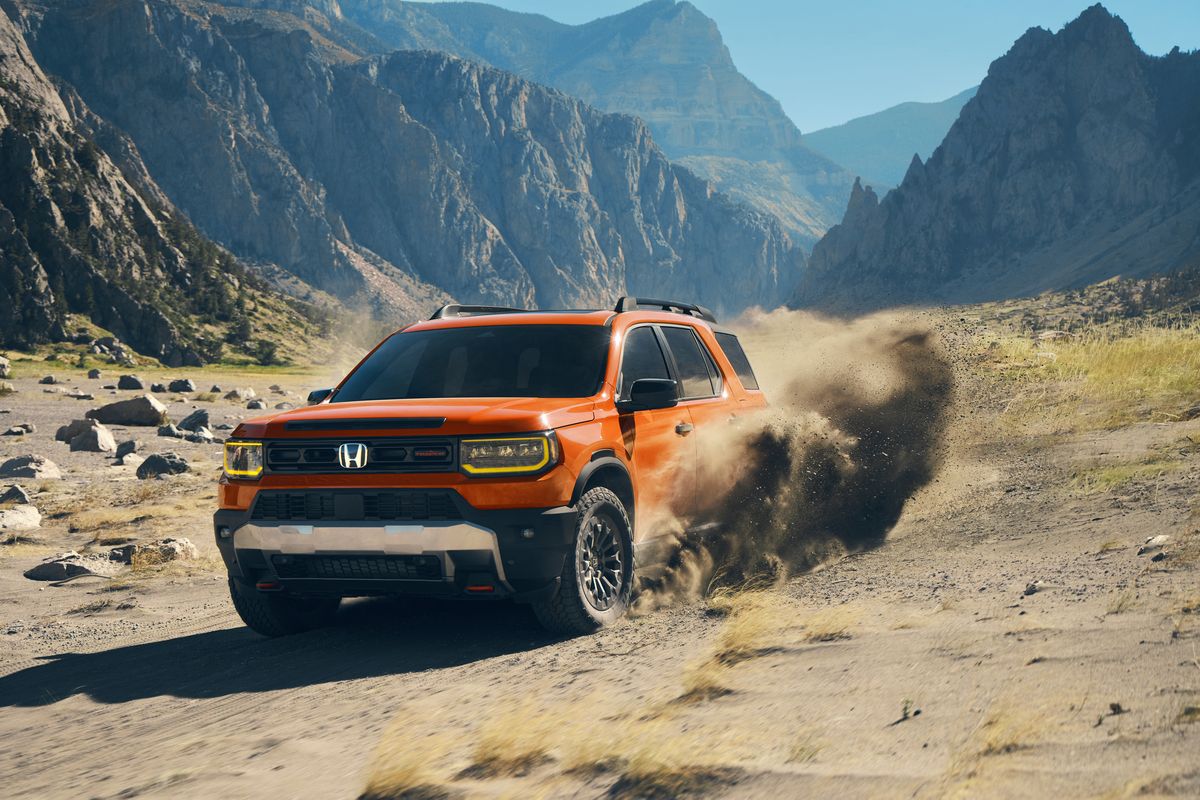
Summer road trips in Quebec load up differently depending on the vehicle. A cooler, a couple of bikes, and four passengers pack one way; a carpool of grandparents, kids, and gear packs another. The 2026 Honda Passport and Pilot solve those two problems differently, and picking between them comes down to how your summer actually fills the back seat and the cargo area.
Passport and Pilot at a Glance
|
Spec |
Passport |
Pilot |
|
Seating capacity |
5 |
7-8 (trim dependent) |
|
Cargo behind front seats (max) |
2,356 L |
3,166-3,219 L |
|
Cargo with all seats in place |
1,246 L (behind 2nd row) |
618-635 L (behind 3rd row) |
|
Ground clearance |
210 mm |
185 mm (most trims); 210 mm (TrailSport) |
|
Turning circle |
11.9 m |
11.5 m |
|
Approach/departure angle |
23.0°/23.1° |
18.3°/20.3° (Touring/Black Edition); 19.8°/19.0° (TrailSport) |
|
Combined fuel economy |
11.4 L/100 km |
11.0-11.8 L/100 km (trim dependent) |
|
Engine |
3.5 L V6, 285 hp, 262 lb-ft |
3.5 L V6, 285 hp, 262 lb-ft |
|
Drivetrain |
i-VTM4 AWD |
i-VTM4 AWD |
|
Towing capacity |
5,000 lbs (2,268 kg) |
5,000 lbs (2,268 kg) |
Cargo and Packing: Gear-First or People-First
Passport’s two-row layout puts almost everything behind the front seats once the second row folds down, opening 2,356 L for bikes, coolers, and camping gear. Left in daily use, the second row still leaves 1,246 L behind it, enough for a week of luggage without folding anything.
Pilot’s three rows change the math. Fold the second and third rows flat and the load floor stretches to 3,166-3,219 L behind the front seats, more total room than Passport offers at its biggest. But with all three rows up for a full carpool, the space behind the third row drops to 618-635 L, closer to a few duffel bags than a cottage haul.
- Passport, 2nd row folded: 2,356 L
- Passport, 2nd row up (daily): 1,246 L
- Pilot, 2nd and 3rd rows folded: 3,166-3,219 L
- Pilot, all three rows up: 618-635 L
Seating for Summer Carpools and Weekend Trips

Passport seats 5, arranged the way most trips actually run: two rows, no folding puzzle, no third-row negotiation. Legroom behind the front seats measures 1,039 mm, comfortable for two adults or a row of kids on a highway drive.
Pilot’s second and third rows add real seats, not token ones. Depending on trim, Pilot carries 7 or 8 people; the Black Edition includes an on-demand removable second-row middle seat that switches the cabin between a 7- and 8-seat layout. That extra row matters most for summer carpools, visiting relatives, and group outings the Passport’s five seats simply can’t cover.
All-Wheel-Drive Confidence and Trail-Ready Hardware
Both SUVs share identical mechanicals: a 3.5 L V6 making 285 hp and 262 lb-ft, a 10-speed automatic, and Honda’s i-VTM4 torque-vectoring AWD system, which can send up to 70% of engine torque to the rear axle. On gravel or a rough cottage road, either SUV starts from the same drivetrain.
Where they part is ground clearance and geometry. Every current Passport trim, TrailSport, TrailSport Touring, TrailSport Blackout, and TrailSport Touring Blackout, carries the same 210 mm clearance, 23.0°/23.1° approach and departure angles, standard steel skid plates, and all-terrain tires. That hardware is not reserved for one trim; it is built into the whole Passport lineup.
Pilot’s off-road-focused hardware, including its own skid plates, all-terrain tires, and Trail and Sand drive modes, lives on the TrailSport trim, which brings clearance up to 210 mm and steeper 19.8°/19.0° angles. Sport, EX-L, Touring, and Black Edition ride at 185 mm with more street-tuned suspension.
Turning Radius, Length and City Driving
Passport measures 4,864 mm long with an 11.9 m turning circle. Pilot stretches to 5,083 mm, 219 mm longer, yet its Touring trim actually turns tighter, at 11.5 m.
For garage fit and driveway manoeuvring, that extra Pilot length matters more day to day than the turning circle. A longer nose and tail need more room to clear a garage door or a tight parking spot, even when the wheel itself cranks around quickly.
Which One Is Right for You?
For a household that rarely carries more than four or five people, the Passport’s two-row layout removes a step from every packing routine: fold one row, load the gear, done. Its 2,356 L cargo hold and standard TrailSport-level ground clearance suit weekend cottage runs and gear-heavy trips well.
For a family running regular carpools, hosting visiting relatives, or handling group outings through the summer, the Pilot’s third row is the deciding factor. Seating for 7 or 8 covers trips the Passport cannot, and folding those rear rows still opens more total cargo room than Passport’s maximum.
Neither layout is the wrong call; they answer different summer questions. The right one depends on how often that third row, or that simpler cargo routine, actually gets used.
Loading Up a Passport or Pilot This Summer
The Passport and Pilot share the same V6 and AWD system but solve different summer needs: one prioritizes simple, flexible cargo space, the other prioritizes passenger count. Matching your typical summer load to the right layout makes the choice straightforward.
Visit Lallier Honda Hull in Hull, Quebec, to sit in both SUVs, load your own cooler or hockey bags into each cargo area, and compare the second and third rows in person before your next road trip.