Same V6, Different Vehicles: How the 2026 Pilot and Passport Are Built for Different Families
May 21 2026,
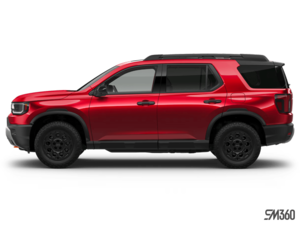
The 2026 Honda Pilot and 2026 Honda Passport share more than a badge. Both use the same 3.5-litre V6 engine producing 285 horsepower and 262 lb.-ft. of torque. Both use the i-VTM4 torque-vectoring AWD system. Both carry Honda Sensing as standard equipment across every trim. They're built on related platforms, and in most respects, they are equally well-made vehicles.
But they are not the same vehicle. The Pilot is a three-row family hauler that seats up to eight. The Passport is a two-row SUV focused on adventure capability and cargo flexibility for five passengers. Which one fits your family comes down to how many seats you actually need and how you tend to use your SUV day to day.
At a Glance: Pilot vs. Passport
|
Feature |
2026 Honda Pilot |
2026 Honda Passport |
|---|---|---|
|
Seating |
7 or 8 (trim dependent) |
5 |
|
Rows |
3 |
2 |
|
Engine |
3.5 L V6, 285 hp, 262 lb.-ft. |
3.5 L V6, 285 hp, 262 lb.-ft. |
|
AWD system |
i-VTM4 (standard) |
i-VTM4 (standard) |
|
Transmission |
10-speed automatic |
10-speed automatic |
|
Cargo (max, seats folded) |
3,219 L (Sport) |
2,356 L |
|
Cargo (2nd row up) |
635–1,702 L (varies by row config) |
1,246 L |
|
Available towing |
5,000 lbs (2,268 kg) with pkg |
5,000 lbs (2,268 kg) |
|
Honda Sensing |
Standard all trims |
Standard all trims |
|
Ground clearance |
185–210 mm (trim dependent) |
210 mm |
Seating and Passenger Space: Where the Pilot Leads
If you regularly carry six, seven, or eight people, the Pilot is the only Honda SUV in this segment that can do it. The Sport, EX-L, Touring, and Black Edition trims seat eight, with a 40/20/40 folding second row and a 60/40 folding third row. The TrailSport seats seven, replacing the second-row bench with captain's chairs.
Third-row access and comfort are practical rather than cramped. Legroom in the third row is 826 mm, which accommodates adults on shorter trips and kids on longer ones. For families with three or more children, or any household that regularly travels with extended family, the Pilot's third row makes a meaningful practical difference.
The Passport carries five passengers across two rows. Rear legroom in the Passport is 1,039 mm — actually more than the Pilot's second row — which means passengers in seats one through five travel in more space per person. For families of four or five, those extra centimetres per passenger add up on longer trips.
Cargo: Two-Row Utility vs. Three-Row Flexibility

The Pilot's three rows create a natural trade-off. With all seats in use, the Pilot holds 635 litres behind the third row — workable for day-trip essentials, but less generous than the Passport in everyday cargo-with-passengers configurations.
Fold the Pilot's third row and cargo jumps to 1,685–1,702 litres. Drop both rear rows and the Pilot opens to 3,166–3,219 litres — more raw cargo volume than any other vehicle in the Honda SUV lineup.
The Passport's two-row configuration means the full second-row capacity is always available. Behind the second row, it carries 1,246 litres — more than the Pilot holds behind its third row. With the rear seats down, maximum cargo volume reaches 2,356 litres. For families who rarely fill seven or eight seats, the Passport delivers more usable cargo space in typical day-to-day driving.
Off-Road and Adventure Capability
Both vehicles use the second-generation i-VTM4 torque-vectoring AWD system that debuted on the Pilot. This system can send up to 70% of engine torque to the rear axle and distribute 100% of that rear torque to either the left or right wheel independently — a meaningful capability advantage in low-traction situations.
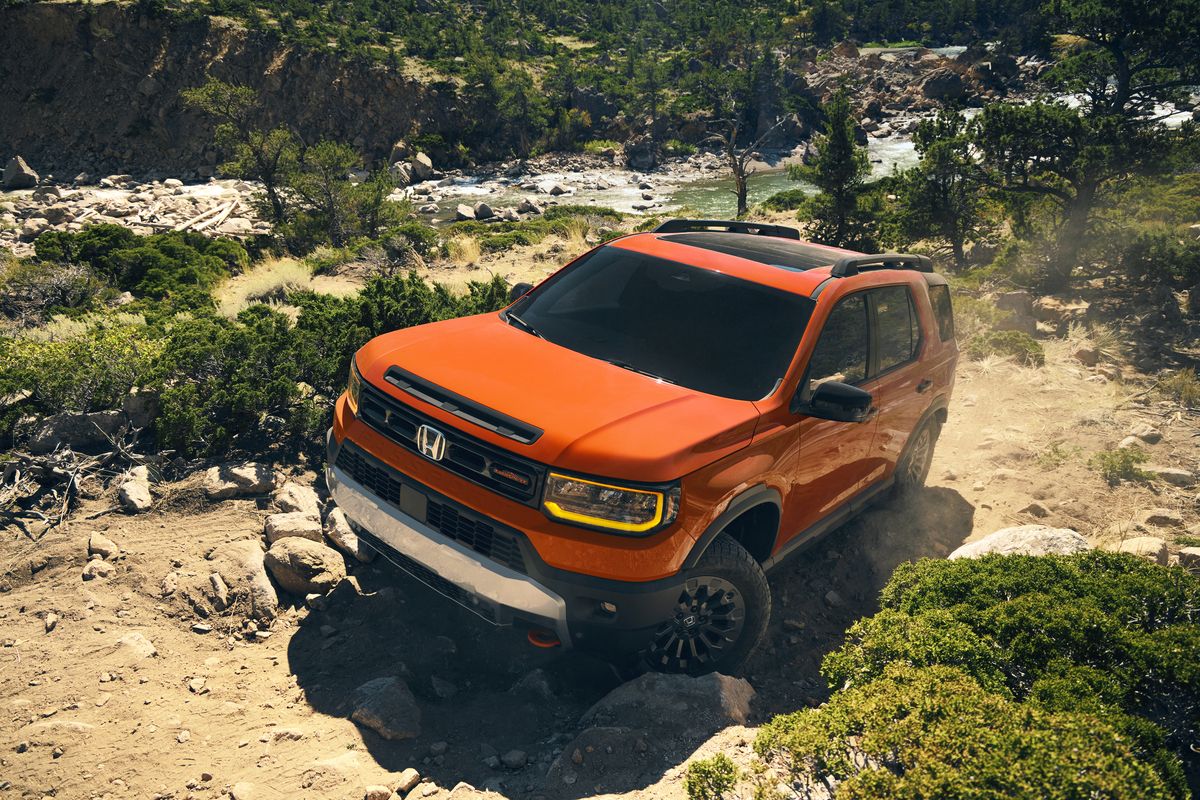
The Passport runs on all-terrain tires across its entire lineup (P275/60 R18), reflects its TrailSport-only positioning, and brings 210 mm of ground clearance standard. Its approach angle is 23.0 degrees and departure angle is 23.1 degrees, giving it strong geometry for trail entry and exit.
The Pilot TrailSport matches the 210 mm ground clearance with off-road tuned suspension and all-terrain tires. The four other Pilot trims use on-road optimized suspension at 185 mm ground clearance.
Both models include drive modes for Snow, Sand, Tow, and Trail as standard on TrailSport variants and most higher trims.
Technology and Safety
Honda Sensing is standard across every trim of both the Pilot and the Passport, with no upgrades required to access Adaptive Cruise Control, Collision Mitigation Braking System, Lane Departure Warning, Lane Keeping Assist, Blind Spot Information, or Traffic Jam Assist.
Both models feature a 12.3-inch touchscreen with wireless Apple CarPlay and Android Auto, Google Built-In, and a wireless phone charger. The Passport's top Touring trims add a 12-speaker Bose audio system. The Pilot's Touring and Black Edition trims do the same.
Which One Is the Right Fit?
Choose the Pilot if:
- You regularly carry six, seven, or eight passengers
- A third row is a frequent-use necessity, not an occasional backup
- You want maximum total cargo volume when seats are folded
Choose the Passport if:
- Your household is consistently five people or fewer
- You want more usable everyday cargo space with all seats in use
- Adventure and off-road capability in every trim is a priority
Both are strong, well-equipped vehicles. The choice isn't between a good option and a better one — it's about matching the right configuration to your actual travel habits.
Compare Both Models at Lallier Honda Hull
If you're deciding between the Pilot and Passport, the team at Lallier Honda Hull in Hull can walk you through both side by side. Come in and put both vehicles in context with how you and your family actually travel.