Is the 2026 Civic Hybrid's 4.9 L/100km Worth It for Your Commute? Six Questions to Find Out
May 18 2026,
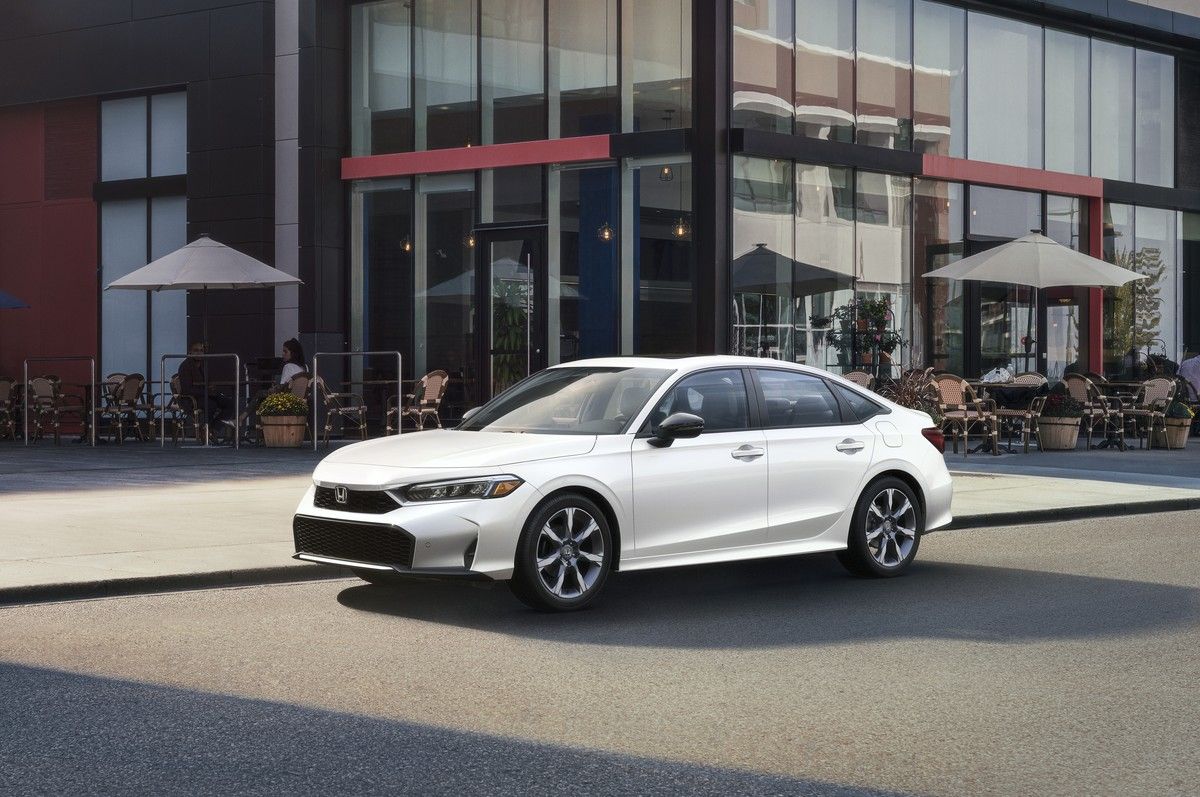
For a lot of drivers, the decision to go hybrid comes down to one question: does it actually fit my routine? A vehicle can have impressive specs on a brochure and still feel like the wrong choice once you factor in how you actually drive, what you carry, and how far you go each week. The 2026 Honda Civic Hybrid is worth a serious look from daily commuters — but it's not the right answer for everyone.
This self-assessment works through the key factors honestly. By the end, you'll have a clearer sense of where the Civic Hybrid fits and where it might not.
At a Glance: 2026 Civic Hybrid Key Specs
|
Feature |
Detail |
|---|---|
|
Powertrain |
2.0 L 4-cyl + Honda two-motor hybrid system |
|
Combined output |
200 hp / 232 lb.-ft. torque |
|
Sedan fuel economy |
4.7/5.1/4.9 L/100km (city/hwy/combined) |
|
Hatchback fuel economy |
4.8/5.4/5.0 L/100km (city/hwy/combined) |
|
Body styles |
Sedan, Hatchback |
|
Hybrid trims |
Sport Hybrid, Sport Touring Hybrid |
|
Honda Sensing |
Standard across all trims |
|
Plug-in required |
No |
Question 1: Do You Do a Lot of Stop-and-Go City Driving?
If yes, the Civic Hybrid is an especially strong fit. The two-motor hybrid system operates primarily on electric power at low speeds — exactly where city driving is most inefficient for conventional engines. The sedan returns 4.7 L/100km in the city, which is the strongest number in the Civic Hybrid's fuel economy range. Every time you brake, the regenerative system recaptures energy that would otherwise be lost as heat.
If most of your driving is highway at sustained speeds, you'll still see solid fuel economy (5.1 L/100km highway for the sedan), but the hybrid advantage over a conventional compact narrows somewhat compared to the city cycle.
Question 2: Do You Need a Plug-In Charger at Home or at Work?
No plug is required. The Civic Hybrid is a self-charging hybrid — the battery replenishes through the engine and regenerative braking while you drive. There is no charging cable, no home charger to install, and no range anxiety if you can't find a charging station. For drivers who want better fuel economy without changing any habits around charging infrastructure, this is a meaningful advantage.
Question 3: How Important Is Driving Feel?
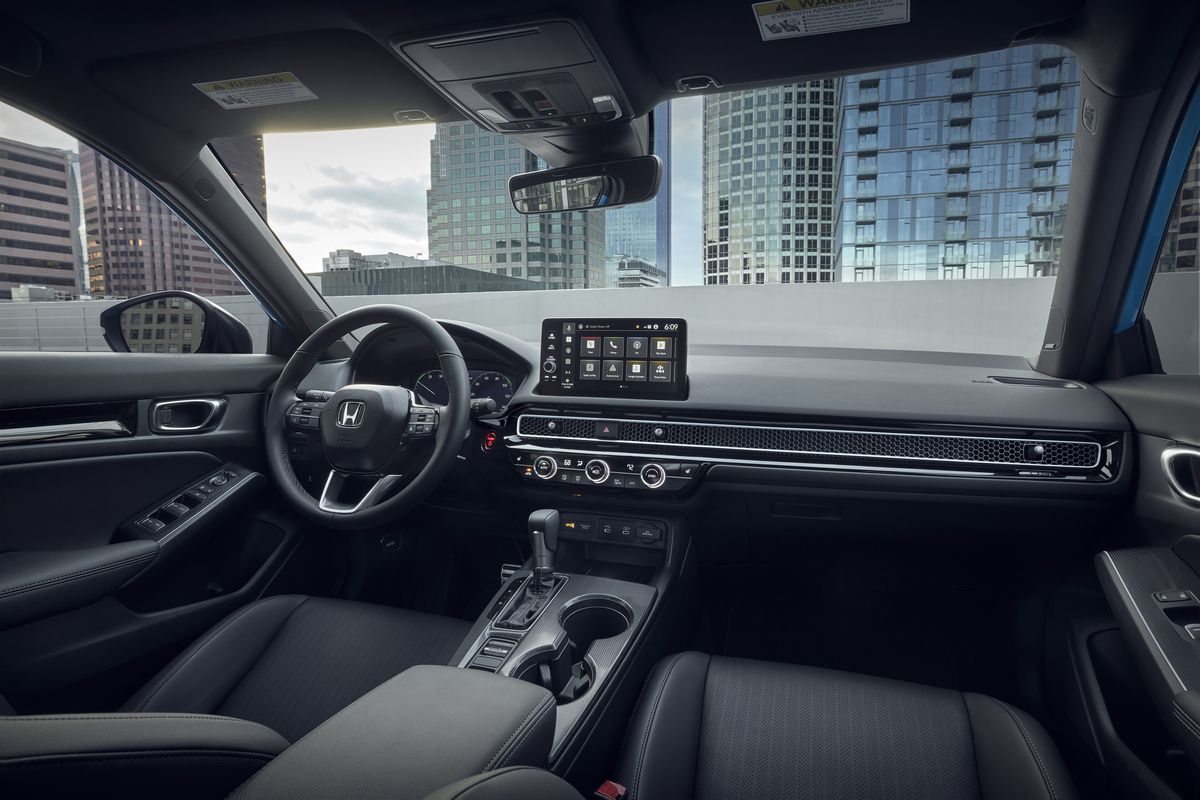
The Civic Hybrid doesn't sacrifice engagement to achieve its fuel numbers. The two-motor system uses direct drive rather than a belt-driven CVT, which gives throttle response a linear, natural feel. Linear Shift Control simulates gear changes under acceleration, adding rhythm to the experience.
The suspension has been specifically tuned for the hybrid models — unique spring and damper settings and a dedicated tire that balances efficiency with a composed, comfortable ride. If you've written off hybrids as slow or numb to drive, the Sport Hybrid and Sport Touring Hybrid are worth experiencing directly.
Question 4: Do You Carry Passengers or Cargo Regularly?
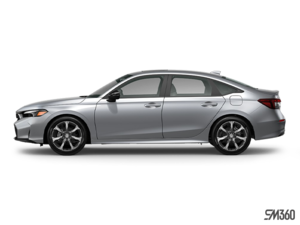
The Civic is a five-passenger compact, and it doesn't compromise rear seat space for its hybrid components. Rear legroom for the sedan is 950 mm — usable for adults. The hatchback variant offers 693.8 litres of cargo volume, and the sedan carries a standard trunk. Neither body style folds flat to SUV-level cargo capacity, but for everyday commuting plus occasional gear hauling, both work well.
If your household regularly needs to carry five people with meaningful luggage, the CR-V might be a more practical step up. But for one or two-person households, or families where a second larger vehicle handles bulk cargo, the Civic Hybrid covers most daily needs without compromise.
Question 5: Do You Want Safety Technology on Every Trim?
Honda Sensing is standard across every 2026 Civic trim — including LX, Sport, Sport Hybrid, and Sport Touring Hybrid. That means Adaptive Cruise Control, Collision Mitigation Braking System, Lane Departure Warning, Lane Keeping Assist, Blind Spot Information, Cross Traffic Monitor, Traffic Jam Assist, and Traffic Sign Recognition come standard regardless of which trim you choose.
For daily highway commutes, Adaptive Cruise Control with Traffic Jam Assist significantly reduces fatigue on congested roads. This feature set is standard, not an upgrade — it doesn't require selecting a higher trim to access.
Question 6: Does the Sport Hybrid or Sport Touring Hybrid Fit Your Budget Better?
Both hybrid trims share the same powertrain and fuel economy figures. The Sport Hybrid includes heated front seats, an 18-inch alloy wheel, and wired Apple CarPlay and Android Auto. The Sport Touring Hybrid adds wireless connectivity, a 12-speaker Bose Premium Sound System, wireless phone charger, a more refined noise reduction package with wheel resonators, and the Individual drive mode for additional customization.
If technology and cabin refinement matter, Sport Touring Hybrid is the more complete package. If the core hybrid experience is the priority, Sport Hybrid delivers it at a lower entry point.
So, Is the Civic Hybrid Right for You?
The 2026 Civic Hybrid is a strong daily driver choice for commuters who value real fuel savings without changing how they charge or refuel, who want standard safety technology on every trim, and who drive a meaningful number of city kilometres each week. The 200 hp output and direct-drive hybrid system make it genuinely enjoyable to drive, not just efficient.
It is less suited to households that routinely need to carry three rows of passengers, tow, or consistently haul large cargo loads — for those needs, the CR-V Hybrid or Pilot is worth a look.
Explore the Civic Hybrid at Lallier Honda Hull
If the Civic Hybrid checks the right boxes for your driving routine, the team at Lallier Honda Hull in Hull is ready to walk you through both body styles and both hybrid trims. See both the sedan and hatchback and ask the questions that matter most to your specific situation.